One of my most important takeaways from working for a publisher was the importance of thinking evergreen. When marketers talk about evergreen content, they’re talking about content that has enduring power and isn’t just connected to a trend or fad. But when I say to think evergreen as a writer, what I’m talking about is not immediately dating your manuscript.
I have noticed that when I tell people I’m an editor in social settings, the most common default reaction for the other party is to immediately admit to being bad at spelling. Usually in a defensive way, as if we need to preemptively get that out of the way before we can be friendly because there will be nothing worse in the world to a professional editor than bad spelling.
The truth of the matter, though, is I actually think that being bad at spelling is just that. It’s not a deep-seated character flaw or a sign of low intelligence or even of poor education. In the same way that some people naturally spell well, some people just don’t. That’s what I learned when I worked as a college comp instructor and, before that, a college writing tutor.
One of the highlights of every summer for me personally is attending a performance (or two) from Opera in the Ozarks. I particularly love their Sunday afternoon shows where, in addition to great opera, you also get free ice cream and an hour-long opera talk before the performance.
Earlier this summer, I attended The Crucible and La Traviata at Opera in the Ozarks, and they were both excellent (as always). During the opera talk about the former, I learned about the writing method of composer, Robert Ward. As is true of many composers, he wrote the music after the libretto text was finished. What interested me the most as an editor, however, was his chosen method of doing so—he kept reading the words aloud as he worked.
When I get asked what my single top editing tip is for writers, I always say to read the text aloud. I’d actually been meaning to write a blog post on how beneficial reading aloud is, and that opera talk just reinforced that it’s an important topic to cover. Though Ward was reading aloud for musical reasons—to ensure that the words matched the music—and not editing reasons, reading aloud is still highly beneficial for writers and editors.
In the past installations of this series, we’ve looked at how Tombstone and Wyatt Earp both offer lessons on plotting, conflict, and antagonists. This week, we’re going to use them as a vehicle for examining how important developing foils is.
A foil is any character who contrasts with another character. Most commonly it’s a protagonist contrasting with an antagonist, but that doesn’t mean all foils are ultimately opposed to each other in a story. Allies can be and are often foils to each other as well.
Discussing foils may come across as something one does in literature class but isn’t particularly applicable in the “real” world of writing, but that’s a stance I strongly disagree with. Foils help flesh out the personalities of both characters involved, and often what really makes characters distinctive is how they interact with others and how others interact with and view them. Foils provide ample opportunity for this.
Foils in Tombstone
Tombstone has a lot of sharply contrasting foils, and that’s a big part of what helps make the characters so vibrant. Each group—the Earp/Holliday faction and the Cowboys—function as foils to each other. But each main character has a foil, and there are foils within each group as well.
Groups as Foils
As far as groups go, the Earp/Holliday faction and the Cowboys are distinguished from each other by villainy. The Earps and Doc aren’t perfect, but they are definitely depicted as far less villainous than their Cowboy counterparts.
That being said, what makes the groups interesting as foils is that they both ultimately subscribe to the same principle that an attack on one is an attack on all and will receive maximum force as a response. The Gunfight at the OK Corral features multiple sets of brothers—the Earps with Doc as an honorary member of the family—and the Clantons and McClaurys, but this operating principle of mutual attack is also openly discussed by multiple characters. The wedding massacre that opens the movie is a wildly disproportionate response to two Cowboys being killed, and the Cowboys’ default reaction, for everything from Curly Bill being taken into custody to Ike Clanton and the McClaurys being insulted, is to swarm in with a larger group.
But the Earps operate under the same principle. Morgan justifies himself to Wyatt by saying that, basically, he can’t let their brother Virgil stand alone, and though that really annoys Wyatt in the moment, he ultimately agrees and joins in despite his better judgment. It takes a lot more to push Wyatt to the point of responding, but once he does, he also rounds up a group of pals to help him enact what he sees as justice. What makes the groups great foils for each other is they’re following the same basic pattern but in such different ways and with such different personalities.
The Protagonist’s Foil
But even within these larger groups, they each have opposing foils. In Tombstone, Wyatt’s foil is Curly Bill, and Doc’s is Ringo. Wyatt is shown from the beginning of the movie to be a natural leader, but he doesn’t want it and only accepts the mantle when circumstances force it on him. He can easily take control of any situation that he wants to, but he really just wants to be left alone to spend time with his brothers and make money. It’s only when the feud gets so bad that he can do neither that he finally embraces his role as leader.
Contrast that with Curly Bill, who relishes his position as the undisputed king of the Cowboys. He’s not necessarily heavy-handed with his men, but he repeatedly puts them in his place as he sees fit and embraces his ostentatious persona and role. However, like Wyatt, he is a natural leader who also can quickly take control of a situation for his own purposes when he has a mind to do so.
Another way in which Wyatt and Curly Bill serve as foils to each other is both of them are, perhaps ironically, the cautious one in their respective groups. Wyatt is constantly advising other people to stand down and just let a tense situation blow past. He doesn’t do it out of fear but rather hard experience at what will unfold if you don’t exercise a little restraint. Thus, he advises Marshal White to not arrest a high and rambunctious Curly Bill as he shoots up the town, pleads with his brothers to not get involved in trying to tamp down on lawbreaking in town, suggests that they let the Clantons and McClaurys sober up and calm down before confronting them, and recommends to Morgan they leave town after Virgil is shot.
Curly Bill also is the one who curbs his fellow Cowboys, but because he’s Wyatt’s foil, it’s not for the same reason or in the same manner. As we’re shown quite pointedly in the opening scene, Curly Bill doesn’t have the slightest problem with murdering anyone, including innocent bystanders. But he’s pragmatic enough to realize when the time isn’t right to provoke a situation and prefers to bide his time. In fact, one of his more offhand humorous, colorful comments during the play—where he jokes he’d sell his soul to the devil and then betray him—is actually a pretty solid summary of his approach to conflict. He’s fine with appearing to play nicely with others when it benefits him, until it’s more to his advantage not to. That’s a strong contrast to Wyatt, who’s very upfront about why he prefers to err on the side of caution.
A particularly interesting scene to demonstrate their differences is one I’ve already mentioned ina previous post in this series. It’s when Curly Bill intervenes to stop Ringo from provoking a shooting with Doc. Curly Bill plays the peacemaker, in the same way Wyatt often does, but Curly Bill’s approach is wildly different from Wyatt’s straightforwardness. Curly Bill reassures the Earps and Holliday to their faces that Ringo is just running his mouth, but he also then privately consoles Ringo and advises caution while simultaneously goading him on further and then ranting about how ill-suited Ringo is to lead the group. It’s a very different vibe from Wyatt, but it’s an equally effective way to flesh out this particular group’s dynamic and their individual character traits. This is a fantastic use of foils to develop both characters!
Doc and Ringo also emerge as more obvious foils for each other—they’re both highly educated and dangerous—and the movie has them frequently clashing directly to bring this point out. Doc is more extroverted, but they both seem tormented and haunted by inner demons. Even the way others react to them is also pretty similar. Others tend to give them both a wide berth because Doc and Ringo make people uneasy, and there’s little question as to why. In addition to both of them being violent and unpredictable, they also both seem to enjoy the unsettling effect they have on others, and they also have no qualms about letting a tense situation blow up even more rather than trying to calm it down. They also both have a stronger bond with one other member of their group. Perhaps not too surprisingly, it’s our previously discussed set of foils. Doc is closer to Wyatt than he is any other member of the Earp family. Virgil doesn’t even like Doc, as he admits at the start of the movie. Meanwhile, Ringo can barely be bothered to talk to any of the other Cowboys besides Curly Bill. If you think in terms of foils, it’s quite appropriate that by the end of the movie, Wyatt kills his foil, Curly Bill, and Doc also kills his foil, Johnny Ringo.
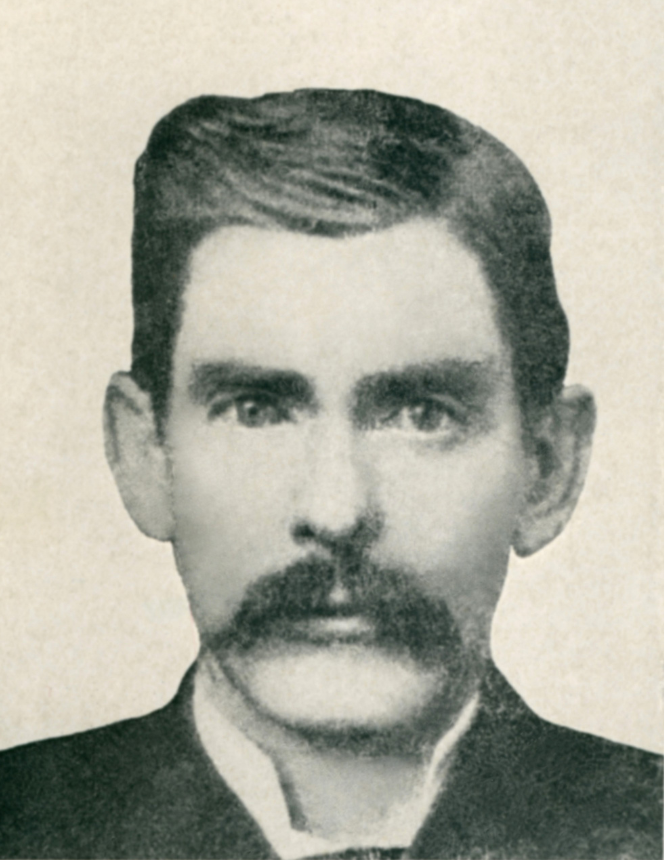
The real Doc, John Henry Holliday
Foils Among Allies
Protagonists don’t have to be limited to antagonists for foils, and I think Tombstone particularly excels at fleshing out the respective group dynamics by developing foils within each group.
The Earp Brothers clearly love each other, but they have very different personalities. Wyatt is circumspect and stubborn. His brother Virgil is probably his equal in stubbornness, but he has a much more strident sense of right and wrong that draws him into frequent conflict with Wyatt,as we’ve already discussed. Morgan, meanwhile, is the earnest, inexperienced one and has tremendous little brother energy. He and Wyatt seem to have an easier rapport than Morgan has with Virgil, but that doesn’t preclude him from ultimately siding with Virgil on the law-and-order issue or him having his share of squabbles with Wyatt, like when he thinks his older brother is being unfairly dismissive of his interest in spiritualism. These moments all generate conflict, but also because the brothers are developed as foils to each other, there’s no chance of confusing them for each other or not understanding the basics of their personalities. Doc is also a foil to all of them in his own way. More experienced than Morgan but less uptight than Virgil and more confrontational than Wyatt, he occupies his own unique role in the group.
The Cowboys also have their own unique group dynamic that derives from the characters’ unique personalities and causes them to function as foils to each other. Curly Bill is the pragmatic leader, while Ringo is the wild card loner. Ike is very much the group idiot. Others with smaller roles still emerge with some distinguishing features, such as Barnes, whose rambunctiousness occasionally seems to annoy even his fellow Cowboys, and McMasters, the conflicted one who seems to be harboring concerns about his comrades as early as the first scene of the movie. In group scenes, you can see these complicated dynamics at play.
Foils in Action
And where the movie really excels is when all these different layers of foils come together in a scene. The first meeting between both groups has a lot of understated subtext that works whether or not you actually get what’s happening, and that’s in large part because of how well established the characters are as foils to each other.
On the surface, it’s the protagonists and antagonists taking each other’s measure in a scene that manages to be both tense and funny. What the scene doesn’t really draw your attention to and just lets unfold quietly is the fact that Wyatt totally cheats at cards in this scene. He rigs the faro game to give his foil and fellow pragmatist Curly Bill a $500 payout as a peace offering.
And every single character’s response helps further establish their own personalities and foil relationships. Curly Bill immediately realizes what is happening and is highly amused and seems content enough to accept the unspoken truce that retired lawman Wyatt is offering him. Game recognizes game. Or maybe foil recognizes foil.
Morgan also immediately gets it and starts counting out the winnings before Wyatt even draws the cards, suggesting this isn’t the first time either of them have done this. Doc and Ringo both also realize what is happening but don’t care because they have no vested interest in keeping the peace and also recognize each other as an instant adversary. Like I said, game recognizes game, and foil recognizes foil. So, of course, they start goading each other, first into a linguistic battle and then a display of gunfighter prowess, much to everyone’s discomfort and then amusement.
And Ike, well, poor Ike is too dumb to realize what is going on, so he continues threatening Wyatt, completely oblivious to the complicated character interplay unfolding in this scene or the fact that Wyatt is extending a proverbial olive branch to them in this moment. (Though to be fair to Ike, I watched this movie dozens of times myself before I realized Wyatt was intentionally cheating at cards here to let Curly Bill win.)
The effective use of foils in Tombstone helps drive the action forward but also really helps flesh out the characters, even in fairly short scenes.
Foils in Wyatt Earp
In my opinion, part of what makes the Arizona action in Wyatt Earp ineffective is the movie doesn’t really use foils. They can’t because the antagonists aren’t really developed enough to serve as a foil to Wyatt, let alone anyone else in the movie. As noted earlier, the only villain there with a distinctive personality is the smarmy sheriff Johnny Behan. And guess what? Because he’s developed a little more, he actually is the closest thing to a foil in the movie for this subplot. It just doesn’t land quite the same because he’s never framed as the primary threat or even a credibly serious one. Likewise, it’s hard to really connect to the family dynamic in the movie because most of Wyatt’s brothers are fairly indistinguishable. Virgil and Morgan are both attacked, as they are in Tombstone and were in real life, but neither get a whole lot to do in the movie, which limits the impact of that plotline.
I’ve ragged quite a bit on Wyatt Earp so far; however, I am going to change pace a little. The Arizona scenes are ineffective, in my opinion, but that doesn’t mean the whole movie is. I personally think the first half of the movie works better, and not too surprisingly, that’s also because it features a better usage of foils.
The more vibrant conflicts in the movie stem from Wyatt’s interactions with his father, his one-time friend and coworker Ed Masterson, his brother James, and his buddy Doc. And in each case, that’s because they’re given more scenes to flesh out their personality and they have some distinctive characteristics that contrast with Wyatt. None of these are villain antagonists to Wyatt, but they receive more character development than any of the actual villains receive, and it benefits them a lot. (It also adds that essential element of conflict!)
The movie depicts Earp patriarch Nicholas as stern but paternal (though the real Nicholas was much less pleasant apparently). When it comes to being a dynamic character, it doesn’t hurt he’s played by Gene Hackman, but we see Wyatt clashing with his father early on due to his desire to run away and join the Army. We also see his father’s emphasis on the importance of family and his early attempts to direct his son’s life. Nicholas only gets about as much screentime as Urilla, Wyatt’s ill-fated first wife, but he makes more of an impression because he’s given more to do and demonstrates more personality. He also serves as a foil to his son, who’s as headstrong as he is but far more impulsive.
Likewise, Wyatt’s terseness contrasts markedly with his friendly coworker Ed. It creates conflict with them as they both work the rough streets of Dodge City and ultimately serves as foreshadowing that Ed is tragically much less suited for this work than Wyatt, but the scenes that highlight how different their approaches are end up being some of the better ones for demonstrating Wyatt’s gruff but pragmatic personality. They’re far more effective than Wyatt being gruff and pragmatic alongside a bunch of other gruff and pragmatic people, which tends to be the vibe of the latter half of the movie.
Wyatt’s tense scenes with his brother James, in a similar vein, also are more vibrant because he and James are allowed to clash. James is more laidback and seems disinterested in many of his little brother’s opinions. Wyatt gets along better with Doc, but the latter’s willful belligerence also helps set him apart from Wyatt’s matter-of-factness.
In all these cases, the use of foils actually does create the potential for a stronger plot and more character development, but it’s not a dynamic that is sustained once the movie switches its focus to the feud with the Cowboys.
Applying These Lessons To Your Writing
Really think about the roles your characters occupy within the story. How does your main character interact with others and how do other characters interact with your protagonist? Do you have any foils already in the story? Do you have any other characters that could be developed into foils? If you don’t know, that’s okay because I can help! Analyzing characterization is part of what I do in both developmental edits and manuscript critiques.
This is my final post in the series. I hope you enjoyed reading them as much as I enjoyed writing them. But even more so, I hope they provided a helpful, accessible way to look at how important narrative structure, conflict, and characterization are to storytelling.
You can analyze any story you encounter—whether it’s a book, a movie, or a TV show—along the same lines. Try it out! Recognizing effective and ineffective storytelling techniques in other works is a great way to sharpen your own narrative-building and characterization skills.
In previous installments of this series, we’ve compared the narrative structure and use of conflict in Tombstone and Wyatt Earp for plotting lessons we can apply to manuscripts. This week, we’re looking specifically at lessons we can learn from the depictions of villains in the two movies.
The Villain Problem in Wyatt Earp
One of the main issues I noted with Wyatt Earp when we discussed narrative structure is the OK Corral subplot occupies about 40% of the movie, but the conflict between the Earp-Holliday faction and the Cowboys is skimmed over. In the same way, the villains themselves are largely incidental to the plot. Curly Bill is probably the most prominent in the sense that he is named and pops up in a couple of scenes. However, there’s nothing fleshed out about him. The Clantons also pop up, but other than a couple of lines where they’re name-checked it’s sometimes hard to tell who even is a Clanton or a McLaury, which is a tension killer once the pivotal actual shootout involving the Clantons and McLaurys starts. In what might be the most egregious example of how little interest the movie has in its villains, Johnny Ringo is only directly shown once, when another character conveniently shouts his name right before killing him. Hi, Johnny. Bye, Johnny. It’s hard to have effective, interesting, or memorable villains when the story doesn’t even bother to distinguish them from each other.
I’ve noticed when working on some manuscripts, the villains are often treated in a similar cursory manner. They pop up as needed—often rather late in the proceedings—and they are easily bested. The writer’s thinking often is the quick dispatch of the villain shows how strong the hero is, but it really does the opposite. If you want an interesting, compelling protagonist, you also need an interesting, compelling antagonist who is a real challenge. From the audience’s standpoint, the protagonist’s victory should not seem guaranteed!
Villainy in Tombstone
Tombstone offers some excellent lessons on how to craft great villains. Unlike Wyatt Earp, Tombstone doesn’t hold off on introducing its bad guys. In fact, the opening scene after the initial narration features them, and boy, are they some really bad guys. They casually slaughter an entire wedding party before nonchalantly sitting down to eat the wedding feast. It’s a memorably villainous entrance, and even if you have a hard time keeping track of this motley crew, you’re not going to soon forget its leader, Curly Bill, and the enigmatic Johnny Ringo.
Curly Bill is flashy—sporting a bright red shirt and snazzy Cavalry boots with aces on them—and surprisingly jovial for a cold-blooded killer. Ringo, meanwhile, sets himself apart as both unusually educated in comparison to the others and exceptionally vicious and standoffish. The others quietly avoid shooting the local priest, but Ringo has no problem murdering him. Though he quickly laughs it off (after the clip ends), Curly Bill even seems a bit shocked by this, despite conducting his own murderous rampage minutes earlier.
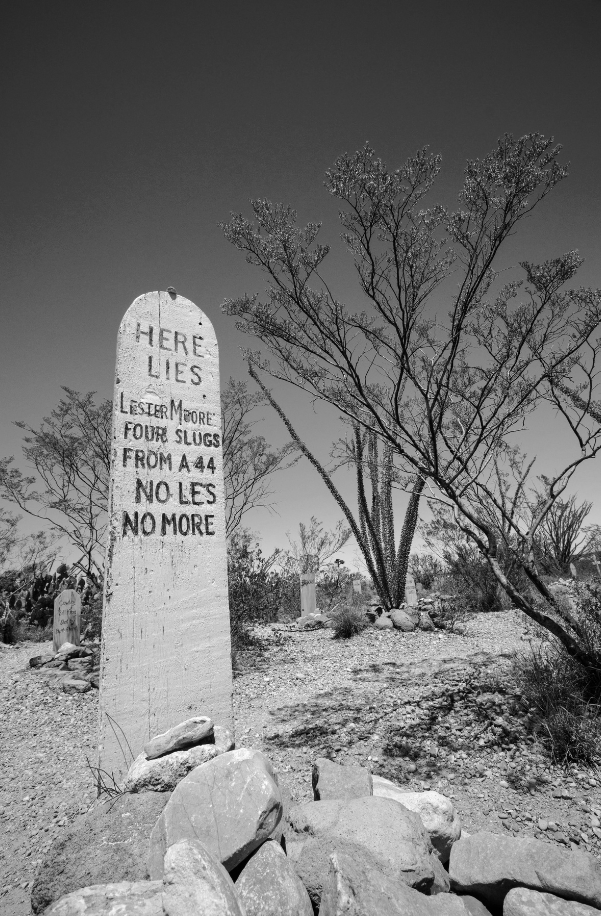
One of the quirkier real-life grave markers in Tombstone’s infamous Boot Hill Cemetery
In the scenes that follow, these characters get fleshed out more and some complexity is added to them. We get to see them take in the theater, in which they are as obnoxiously ill-behaved as you’d expect, but they also end up genuinely captivated and moved by Shakespeare. We then get to see them finally meet Wyatt and Doc, which is also about as tense as you’d expect. Through all of this, Curly Bill remains the gregarious one while Ringo comes across as the ultimate dangerous loner. But Curly Bill is shown to be a bit more restrained than the others, not out of any moral compunction but rather just because he’s more cunning and patient than his affable, grandiose personality suggests. Ringo is also shown to be innately troubled and resigned to it in his own private way, as well as unsettled by Doc Holliday.
It takes a bit for the movie to focus on Ike Clanton, but he’s also hard to forget once you meet him. An annoying loudmouth who can be reliably counted on to always run from a fair fight, Ike completely lacks either Curly Bill’s social skills or Ringo’s brains, and he’s clearly going to be the gasoline poured on this fire.
By early establishing these character traits, Tombstone ensures its villains aren’t just wallpaper for the events that unfold. They’re a vital part of the plot, and they’re treated accordingly. They’re undeniably bad guys, but they’re also relatively three-dimensional ones with their own individual personalities and goals. They don’t just exist to be mowed down by the protagonists. They even have friends and lives outside of being the movie’s villains. Mostly evil friends they commit crimes with and lives that largely revolve around being rowdy jerks, but there’s clearly a bond between them all that drives their own quest for revenge in the same way that Wyatt’s anguish over the attacks on his beloved brothers drives his own vengeance.
And during Wyatt’s vengeance ride, the movie doesn’t treat Wyatt triumphing as a foregone conclusion, even though if you know your history you know you don’t have to worry about his survival. Yes, Kurt Russell’s Wyatt and friends slaughter a lot of cowboys—a truly unhistorical amount, to be honest—but it’s not a given he’ll survive the ambush set by Curly Bill and he expresses genuine concern to Doc that he won’t emerge victoriously if he squares off with Ringo. Because we’ve seen both of these bad guys in action, they loom as a significant, very real threat to him.
The Problem with Weak, Ineffective Villains
In contrast, Wyatt Earp attempts to explain the conflict in a few quick lines of dialogue and treats the presence of the Cowboys as afterthoughts. One could perhaps argue there is a thematic purpose for that, to demonstrate that they weren’t so much of a threat, but I don’t think you can then blame audiences for treating the storyline as an anticlimactic afterthought in return. A Johnny Ringo who’s only identified just as he’s shot down isn’t going to be anywhere near as interesting of an antagonist compared to when the story has developed him as a haunting, formidable, and unbalanced psycho for nearly 2 hours. It’s also not even an example of in media res storytelling since this is hardly the start of the story. Rather than starting in the middle, it just pretty much skips over everything related to the antagonists.
Do you know who actually emerges as the most memorable antagonist in the Wyatt Earp depiction of Tombstone? The smarmy, gladhanding town sheriff, Johnny Behan. He is no actual physical threat to Wyatt Earp, in that movie or real life, but he gets a lot more screentime and development than any of the other antagonists.
Applying These Lessons to Writing
We talked last time about the importance of introducing your story’s conflict early to ensure the narrative is compelling. It’s just as vital to make sure the antagonist at the heart of that conflict is an interesting, vibrant character in their own right. To work as a legitimate threat to your protagonist, the villain needs to be an actual challenge and have an actual role in the story.
Next week, we’re going to use the two movies as a jumping-off point to expand on these principles about character development and look at how creating foils for your characters is also a vital aspect of storytelling.
Last time, we discussed how Tombstone more effectively structures its narrative compared to Wyatt Earp. This week, we’re looking at how the conflict development is also more effective in Tombstone. These aspects of storytelling work in tandem, but I think the role of conflict is worth exploring more in-depth on its own merit.
I’ve talked before on here abouthow vital conflict is to storytelling, and it’s something I frequently discuss with my authors. In quite a few manuscripts I’ve read as an editor, one of the first things I notice is that there is no conflict. Everyone gets along. The villain is quickly dispatched, and the characters are all nice people. This is an ideal situation in real life for most people, but it’s a killer for narratives.
The Importance of Conflict
Conflict is absolutely vital for narratives!
It doesn’t have to be high stakes in the grand scheme of things, per se, depending on the story and the genre, but it has to be there as a guiding force for the action and it needs to be high stakes for the characters. It’s what propels the plot forward and also cultivates the characters’ development.
Tombstone’s Use of Conflict
Because of the sharper focus we discussed last time, Tombstone does a great job of developing conflict throughout the movie. By devoting almost all of its runtime to introducing us to the major players in Tombstone, letting the audience watch the start of the conflict between the principal characters, and following the conflict to its natural resolution, the movie amply develops that central conflict. Even if you don’t like the movie, you’re not going to watch Tombstone and end it not knowing why those guys hated each other or the personalities of the main characters on both sides.
Conflict Among Allies in Tombstone
I’ll discuss more about the conflict with the main antagonists in the next blog post, but even the Earp-Holliday alliance in the movie features its share of conflict. This Wyatt Earp, all in all, is a good guy, but he’s not a perfect guy nor is he eager to be the story’s hero. He’s a better man than his chaotically villainous opponents, but he’s also pretty self-interested. Wyatt and his brothers have heated arguments over what to do about the growing instability in Tombstone. Again, Wyatt may be the protagonist, but he doesn’t have the most conventionally heroic approach to the situation. He’s there to make money, and he’s fine with whatever happening as long as it doesn’t affect his bottom line. He has no interest in being the instrument for instituting law and order. He’s not entirely disinterested, but he knows from personal experience how dangerously these situations can escalate, and he’s done with that.
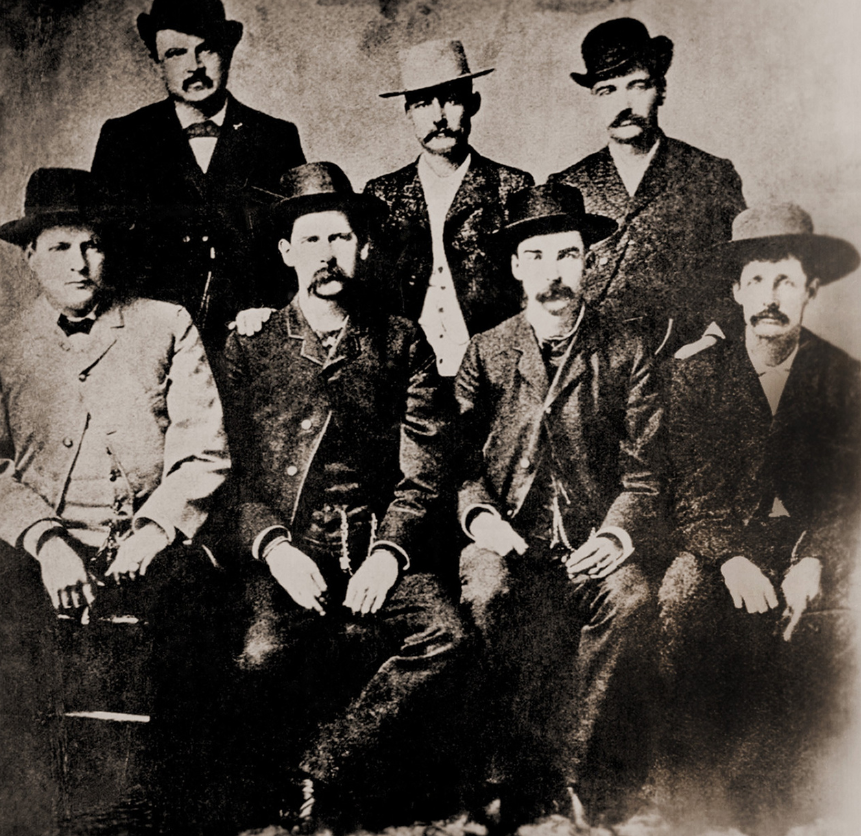
The real Wyatt Earp and his fellow members of the Dodge City Peace Commissioners
But that approach starts to really bother his older brother Virgil. The longer he stays, the more it haunts him. And this creates conflict! In fact, it’s quite realistic conflict because both Earp brothers have a point, and in my opinion, that’s the best kind of conflict in a story. Wyatt isn’t wrong that getting involved is going to cause a lot of trouble—the movie proves his argument for him—but Virgil isn’t wrong either that the situation is unsustainable and predatory. (The movie also proves his argument for him.)
In fact, Wyatt’s strong reluctance to return to being a lawman is a recurring source of conflict between Wyatt and many other characters. He’s constantly approached and asked to serve as law enforcement, an offer he repeatedly turns down. The movie effectively intertwines this conflict with his conflict with his brother and the larger conflict within the story as the feud between the Earps and Cowboys becomes so bad that eventually Wyatt has no choice but to get involved.
The antagonist Cowboys of course provide their own source of conflict throughout the story in opposing the Earps, but their ranks are also not entirely unified. In one of my favorite scenes, Johnny Ringo—furious over the OK Corral shootout that killed his friends—tries to provoke a fight with the Earps. That could be pretty standard villain-induced conflict, but what makes it especially interesting is that Johnny’s Cowboy friends are actually the ones that intervene to stop him. What then ensues is conflict between Johnny and Curly Bill (and the other Cowboys who round him up). And again both sides have a point. If you put on your proverbial Villain (Cowboy) Hat, Johnny’s not wrong to want to avenge his dead friends. But Curly Bill’s not wrong either to urge him to pipe down for the time being and wait for a more strategic time for revenge.
In my opinion, a lot of what diminishes Wyatt Earp as a narrative is its use of conflict is uneven, underdeveloped, and one-sided. The first half of the movie deals a lot with Wyatt’s internal conflict. He doesn’t seem to particularly enjoy being a lawman, and as the movie well demonstrates, it’s not a particularly rewarding job in a roughneck place like Dodge City. He keeps leaving the job and then finding his way back. That’s actually a pretty good premise for conflict in a story. Why does Wyatt keep ending up in these situations doing something he doesn’t want to do? How does that affect him as a character? The movie never really addresses this.
Just as in Tombstone, wanting to do something else is a big impetus for him relocating to Arizona Territory. However, after his business ventures blow up in his face, he returns to his previous profession. That’s actually something I found rather anticlimactic in the movie. He’s spent a good chunk of the runtime talking about wanting to do other things and actually doing them, but once he’s thrown back into this job he doesn’t want, it’s never really discussed again. I think this is also a missed opportunity to explore more facets of Wyatt’s character. Does he actually enjoy it after all? That’s never the sense the movie gives its audience. Does he resent this turn of events? Has he resigned himself to it? Is he so pragmatic he doesn’t even engage in this level of self-reflection? It’s hard to tell.
I believe the reason the movie never quite resolves this is because the movie never seems entirely clear on how it wants to frame Wyatt, other than he became more grim because his first wife died tragically. It shows a much more unlikable, darker Wyatt than Tombstone does, but it also often frames him as a far more conventional and noble hero too. The dichotomy between these two sides of him is never explored, so he often seems underdeveloped rather than complex. I suspect the unclear characterization of Wyatt is a big part of why the moments of conflict in the movie often fall flat because the movie repeatedly depicts conflict without ever having a real focus on what the conflict tells us about the characters. I also think that deep down the movie might be uncomfortable with what it is telling us about Wyatt, so that’s why it presents these scenes but then shies away from their implications.
[As a side note, I am pretty sure this uncertainty about Wyatt is why the ending scene about Tommy Behind The Deuce, which we discussed last time, is so muddled. It leaves audiences unsure of its intent because, 3 hours into the movie, the film itself is still actually unsure of how it’s framing Wyatt.]
Promising but Unfulfilled Conflict in Wyatt Earp
Wyatt does have conflict with others throughout the movie, but it’s again not developed enough to truly be effective. One of the big scenes of conflict is when he and one of his in-laws get into a very heated argument at a family get-together. Now, you might be reading this blog series and wondering if your story has insufficient conflict because it doesn’t involve something as dramatic as the Gunfight at the OK Corral. I don’t agree with that stance at all. Conflict doesn’t have to be epically dramatic in the conventional sense to work. In fact, I love petty domestic drama in stories! People being gloriously petty in historic settings is one of my all-time favorite genres.
So, this outburst in Wyatt Earp intrigued me more so than a lot of the more conventional conflict scenes because it involved some real displays of emotion and even some potentially high stakes for the characters, despite the fact it’s nowhere near as inherently dramatic as a gun battle. His sister-in-law demands to know why Wyatt is dictating the entire family’s actions. But this promising addition of something resembling conflict quickly fizzles out because it’s not developed enough to work. The movie never fleshes out the in-laws beyond them disliking Wyatt. Do they have a valid point? I think so—I don’t think most spouses would be happy in this situation either—but the movie never really addresses their perspective other than them screaming at Wyatt about it. Wyatt’s brothers murmur support for staying in cahoots with Wyatt, which could suggest Wyatt has a point, too, but they don’t have anything to say as the argument gets uglier and Wyatt insults their wives. What do they think about all this, really? Do they regard their brother as a tyrant or do they also see their primary allegiance as to each other rather than their spouses? Again, they’re not developed enough for us to know or even guess. Wyatt immediately dismisses the argument, and that’s pretty much that. It’s hard to be invested in this conflict, despite its initial promise as character-driven conflict, when the movie isn’t interested in it either.
A similar dynamic pops up with the love triangle between Wyatt, his wife Mattie, and his new love interest Josie that develops in Tombstone. To be perfectly honest, this is my least favorite storyline in Tombstone. No offense to Dana Delany, but as Josie, she seems to have wandered in from a completely different movie to me, to do things like cheerily ask Wyatt if he’s happy. Is anybody actually happy in Tombstone, except for Curly Bill and maybe relatively happy-go-lucky-for-an Earp Morgan? I think I’d be more interested in a scene where she asks them that rather than Wyatt. . . . So, I was curious to see how Wyatt Earp handled the same storyline, but again, it pulls its punches when it comes to the conflict this could generate.
In this version of the story, Wyatt more openly dumps Mattie for Josie, but this is after he’s repeatedly made it clear to Mattie that he will never love her. Tombstone makes the infidelity more opaque and implied, but it also approaches Mattie differently. She and Wyatt are clearly not getting along well and the relationship is unraveling already, but there’s no indication that they didn’t once love each other at one point. However, by repeatedly establishing that Wyatt has really just been humoring Mattie all along and that he had long warned her that he would never give her the relationship she wanted, Wyatt Earp lessens a lot of the potential conflict generated from the affair. That’s even in spite of the fact that the movie actually features more overt conflict about it than Tombstone. That Mattie knows what’s going on, but mainly just limits herself to glaring at Josie and making passive-aggressive comments to Wyatt. This Mattie screams a lot at both Wyatt and Josie (and even takes a potshot at Wyatt), but again, the conflict doesn’t land when the narrative has worked so hard to minimize Mattie’s point of view and make their relationship seem so one-sided.
Applying These Lessons to Your Writing
What’s the lessen in all of this? Cultivate your narrative’s conflict throughout the text. Don’t wait to introduce the conflict toward the end of the story. It needs to be a sustaining feature throughout. Also, don’t limit conflict to just between your protagonists and antagonists. There can be lesser degrees of tension between characters that are otherwise allies. Finally, don’t pull your punches with conflict. Let both sides have understandable points of view, even if one side is more clearly in the right than the other ultimately. Artificially imposed conflict for the sake of conflict is never going to work as well as the realistic conflict that can generate from two people who have very different approaches to a situation but firmly believe they’re in the right. Don’t know how to do these things? I can help! These are the types of issues I identify in both developmental editing and manuscript critiques.
What’s Next
Beyond the pacing and narrative structure concern I’ve identified, I believe Wyatt Earp has another pivotal problem I often see in manuscripts. It has a bad guy problem. Namely, its bad guys aren’t very developed or distinctive. Tombstone, however, benefits from having some of the most memorable villains in the genre. We’ll talk more about that and why compelling antagonists are so vital in the next installment of the series.
Welcome to my new blog series, where we’re going to spend this month examining writing lessons you can learn from the 90s Westerns Tombstone and Wyatt Earp. Today, we’re going to be digging into the narrative structure of both movies. Both have a different approach—Tombstone focuses almost exclusively on one period in protagonist Wyatt Earp’s life while Wyatt Earp is a more general biopic. However, I think Tombstone more effectively uses its narrative structure to achieve what it sets out to do.
Neither movie uses a particularly complex structure. They are for the most part strictly chronological, but in my opinion, Wyatt Earp lacks a strong narrative thread in its attempt to depict its protagonist’s life, whereas Tombstone’s narrower focus strengthens that movie significantly. It is not a given that a longer or more comprehensive story will be less effective, but I think it is a problem for Wyatt Earp because it is symptomatic of how the movie has a lot to say but paradoxically also never really seems to know what exactly it is trying to say about its main character.
Interestingly, there were supposed to be flashbacks to Wyatt’s earlier lawman career in Tombstone, but the movie ultimately dumped them. It starts with the Cowboys in action—with a massacre at a wedding, so you know they’re really bad guys—and what unfolds over the next 2 hours is pretty much all about the leadup to a clash between them and the Earps. As soon as you’re introduced to both sides, you don’t even have to know your history to know that this will get nasty. You get to watch their tense first encounter about 30 minutes into the film and can see firsthand how the situation rapidly deteriorates from there.
Wyatt Earp’s Narrative Stucture
Wyatt Earp, meanwhile, has a runtime of over 3 hours, and it crams so much into that time that it often treats what should be significant moments as merely perfunctory. It almost seemed to me like it was checking off events in Wyatt’s life rather than presenting a cohesive narrative about it or really attempting to flesh out those events and their significance to him. When the narrative doesn’t treat these story beats as important, it’s not surprising that they don’t really land for audiences either.
One of the pivotal aspects of this movie’s Wyatt is how traumatized he is by his first wife’s death. It precipitates some of his worst behavior and has a negative impact on his later relationships. We have some preamble before we see his wife Urilla where he talks at a prostitute—and by extension the audience—about how this is his childhood sweetheart he’s pined over for years. Butthat’s telling, not showing, and simply telling your audience how important Urilla is rather than demonstrating that with the writing is never going to be particularly effective.
Underdeveloped Plotlines
What we’re actually shown is only approximately 10–12 minutes of Urilla, from her introduction to her burial. That 10–12 minutes is packed with their reunion, their courtship, their marriage, and her death. It’s easy to feel sorry for Wyatt after he’s a widower in the same way you’d feel sympathy for anyone in that situation, but the movie spends far more time depicting the fallout from that death than establishing anything particularly special about Urilla and her relationship with Wyatt. For her to truly matter to audiences and for them to connect with her and, by extension, Wyatt’s pain at losing her, they need to see more of her than approximately 10% of the runtime.
In my opinion, what really hurts Wyatt Earp compared to Tombstone is the movie takes a similar approach to the events leading up to the OK Corral. We’re not even introduced to the antagonists from there until over halfway through the movie, and in about 1 hour, 15 minutes, they’re dispatched. That’s a little under 40% of the runtime but in the back half of the movie. When we are introduced to the Cowboys in this movie, there’s already bad blood between them and Wyatt. The characters helpfully shout some explanations for their feud at each other for the benefit of the audience, and Wyatt and his nemesis Sheriff Johnny Behan also dutifully repeat all the reasons they don’t like each other in a chat at a saloon, but again this is telling, not showing.
Telling audiences that these guys have a major beef with each other is not the same as showing it. Because audiences have not been able to observe any of the conflict development or any of the antagonists beyond them screaming about how much they dislike the protagonist, it’s hard to connect to the storyline or feel much vested interest in it. At the end of the day, the audience for Wyatt Earp has only a few minutes of conversation that’s supposed to underpin what fuels the violent antagonism between the Cowboys and the Earp-Holliday faction and what motivates any of the individuals involved. That doesn’t make for a very compelling audience experience. The movie devotes just enough time to Tombstone and the Cowboys to ensure that this is a major subplot, but it’s nowhere near enough time to really do it justice.
Tombstone’s Narrative Structure
In about the same span of time that Wyatt Earp devotes to the entire Tombstone/Cowboys subplot, Tombstone has only worked its way up to the infamous shootout. The fallout from it then occupies another 30 or so minutes. This focus and development give these storylines more room to breathe, and they have more of an impact on the audience as a result. There is no mention of Urilla in this movie, but I’d argue that Tombstone’s depiction of Wyatt’s grief over his assassinated brother Morgan is far more devastating simply because the audience has been able to watch Wyatt’s dynamic with his little brother. You watch the two celebrate being reunited, work together, joke together, hang out together, and bicker together for nearly 90 minutes before Morgan dies, and that has more emotional weight to it than if we only spent 10 minutes with Morgan.
Dueling Scenes
What’s especially puzzling to me about the narrative structure of Wyatt Earp is that it breaks its chronological narrative when it devotes its final 15 minutes to an epilogue scene years in the future. It shows Wyatt and Josie, who has healed his heart over Urilla’s loss, on an adventure in Alaska and a coincidental meeting between them and the relative of a man named Tommy Behind-the-Deuce. At this point, the only previous mention of Tommy is an early conversation between Josie and Wyatt. She makes a cryptic reference to having heard about what happened, which Wyatt shrugs off as just stories.
But this meeting seems to confirm the story was real and even features a full-fledged flashback to show Wyatt bravely holding off a mob that wants to lynch Tommy. It’s not a bad scene as far as that goes, but its placement here seems wasted. Tommy was a one-time throwaway line of conversation an hour earlier, so it is anticlimactic to suddenly stop the story right at its end to present this new story. And at this stage what does this scene tell us about Wyatt that we don’t already know? He’s already been shown to be fearless in the execution of his duty and skilled at handling rowdy situations. What does it tell the other characters in the scene about Wyatt Earp that they don’t already know?
After all that, it then returns to Wyatt saying some people say it didn’t happen that way, which Josie shrugs off. What does he mean? Is he being modest about his heroics or is he admitting it really didn’t happen that way? I’ve rewatched the scene multiple times as I worked on this post, and I still don’t know! This parting line potentially undercuts the point being made, if that weren’t already muddled because the movie doesn’t seem to know what it actually wants to say about Wyatt Earp in general. I’ll talk more about this next week, but the movie never particularly settles on a strong point-of-view about Wyatt beyond Urilla’s death crushed him.
It might also have been an interesting complication to explore (I love delving into how legend and myth collide with history!), but it’s nowhere near developed enough to work, so it just seems tacked on. I suspect the 15 minutes used for this would have been better spent on developing the conflict with the Cowboys to be more robust in its own right.
In contrast, Tombstone also has its own scene of Wyatt holding off an angry crowd, but it’s incorporated much more holistically in the story. It occurs about 50 minutes into the movie, after the opium-addled antagonist Curly Bill shoots the town marshal. Despite not being law enforcement, Wyatt quickly takes control of the situation and holds off the outlaw’s very angry friends, as well as the equally outraged crowd of bystanders that wants to lynch Curly Bill. It’s a scene that is both suspenseful and amusing since Wyatt so solidly stands down the inept Ike Clanton, but it also is a very efficient scene in terms of storytelling. It gives us a great sense of Wyatt’s matter-of-fact, take-charge style when he feels the need to assert it. It shows us Doc’s loyalty to him as he manifests out of a saloon to lend a hand. It helps further the plotline about the growing hard feelings between the Earps and the Cowboys. It also gives us some good character development for a number of the Cowboys as we see them in action. It ultimately achieves far more than the Wyatt Earp scene does, and its placement and role in the overarching story is part of that.
If the final scene in Wyatt Earp were a twist, it might work at the end, but it’s not. It’s unfocused/unclear in its intent and just more of the same characterization we’ve already seen over 3 hours for Wyatt. It also otherwise centers on an insignificant minor character when it should be wrapping the story up. Meanwhile, Tombstone instead wisely places a similar moment much earlier, where it manages to both further the plot and conflict and flesh out pivotal characters who are now further drawn into the storyline precisely because of what goes down in that scene.
Final Thoughts on Narrative Structure
To be fair to Wyatt Earp, the project initially started as a television miniseries, and I suspect these issues wouldn’t have been issues at all in a project of that scope. In that medium, I imagine the subplot about Urilla would have been fleshed out more, in the same way that the events with the Cowboys likely would have been more fully realized. However, I think once the project shifted from a miniseries to a movie, there needed to be a more realistic assessment of what could be covered effectively within the new time constraints.
Applying these lessons to writing
One of the issues I often see in manuscripts is a similarly episodic approach to plotting that Wyatt Earp has. Things happen in the story, but there often doesn’t seem to be any real narrative cohesion to it, and plot complications are resolved as quickly as they manifest with no real build-up or proper development. Real life can certainly unfold that way, but that’s not really how narratives work. It’s especially not satisfying for readers when complications and conflict fizzle out without any proper development or resolution.
Though much of this applies to fiction manuscripts, nonfiction narrative writing is not exempt either! A great example—on this very topic—is Jeff Guinn’s excellent The Last Gunfight, which I recently reread. Guinn provides a well-researched account of what happens, but he doesn’t just jump right in to tell you about the titular event. Instead, you read 200 pages—a good 50% of the book’s length—before he even gets to the infamous shootout. That’s because he’s taking his time to sketch out the context and the historical figures involved. The result is compelling and effective, and the book is all the better for it.
If you’re struggling with the structure of your fiction or nonfiction manuscript, I can help! Looking at the plot and narrative structure is part ofthe developmental editing and manuscript critique services I offer authors. I’ve also writtenother blog poststhat touch on some of these issues.
Next time
Regarding Tombstone and Wyatt Earp, I think another central difference is the role of conflict. While Wyatt Earp’s narrative structure lessens the tension, the movie itself also repeatedly seeks to minimize moments of conflict between characters that could add richness both to the plot and characterization. Tombstone, meanwhile, effectively amplifies the conflict every chance it gets. We’ll talk about that more next time.
Disclaimer: One of my all-time favorite movies is Tombstone (1993), starring Kurt Russell, Val Kilmer, Sam Elliott, Bill Paxton, Powers Boothe, Michael Biehn, and a bunch of other great actors. If it is on TV, I will sit down and not move until it’s over. If someone else suggests watching it, I will join them. And if left to my own devices, I will watch it at least once or twice a year. Okay maybe more than that. Did I write this blog series as an excuse to rewatch Tombstone for research purposes? I refuse to answer that question. 😊
Given its troubled behind-the-scenes production, which included the original director being fired, Tombstone surprised the film world by being a sleeper hit. It also ended up besting Kevin Costner’s bigger-budget biopic film Wyatt Earp (1994), which was released half a year later, at the box office.
Tombstone is now widely considered a modern classic Western, while Wyatt Earp is relegated to relative obscurity. In the name of fairness, I recently decided to rewatch Wyatt Earp after not seeing it since I was a teenager. Wyatt Earp is not a bad movie—it is well-acted and has great production values—but it struggles with pacing and focus.
A lot of commenters reason Wyatt Earp bombed simply because people weren’t interested in another movie about the same topic so close together, but I suspect the issue was more in the writing of Wyatt Earp than the repeat in topic. It dawned on me as I was watching that it also falls into some of the same pitfalls I warn authors about in their manuscripts.
So, throughout the month of March, we will be looking at some writing lessons you can apply from Tombstone and Wyatt Earp to your own manuscript.
What exactly is the series going to do?
I have so much to say that I’m breaking it into 4 different weekly blog posts beyond this introduction, covering narrative structure, conflict, antagonist character development, and foils.
Today, however, we’re just going to lay the foundations for the series, which includes some disclaimers about what I am and am not trying to do.
What is the series not going to do?
One of the first things I want to clarify is this isn’t intended as a film analysis. I’m not an actor or a screenwriter, and screenplays are very much their own genre of writing with their own rules. They’re dependent on actors to bring the material to life, and a good actor can elevate a mediocre screenplay in the same way that a bad actor can ruin good material.
However, what we’re discussing is the building blocks of narrative and characterization, which are just as applicable to a novel or a narrative nonfiction book as it is a movie. The way books and movies go about developing these things are different because they’re different mediums, but the basic principles of good storytelling are the same.
We’re also not going to be focusing on the historical accuracy of the movies. Both of them made an effort to be more accurate than their cinematic predecessors, but both of them have their share of errors. Again, we’re looking at them through the lens of what makes for effective storytelling.
Are there going to be spoilers?
There are of course also going to be spoilers about these movies in these posts. I personally don’t think you can “spoil” history, but yes, I’ll be doing that too.
That being said, it is helpful to have some basic information to follow the discussion, so you shouldn’t have to watch the movies to read along. (However, I’d be interested in hearing your take on the movies if you do choose to watch them or have already done so.) I’ll also be linking to clips of select scenes as needed, though more so for Tombstone than Wyatt Earp. It’s harder to find good-quality clips of the latter.
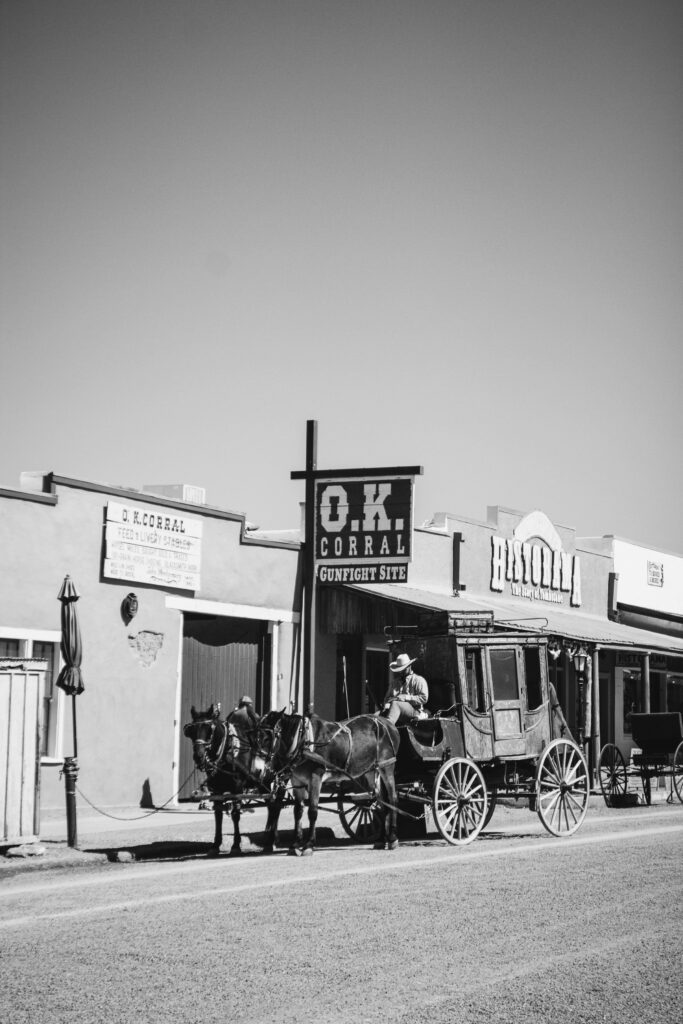
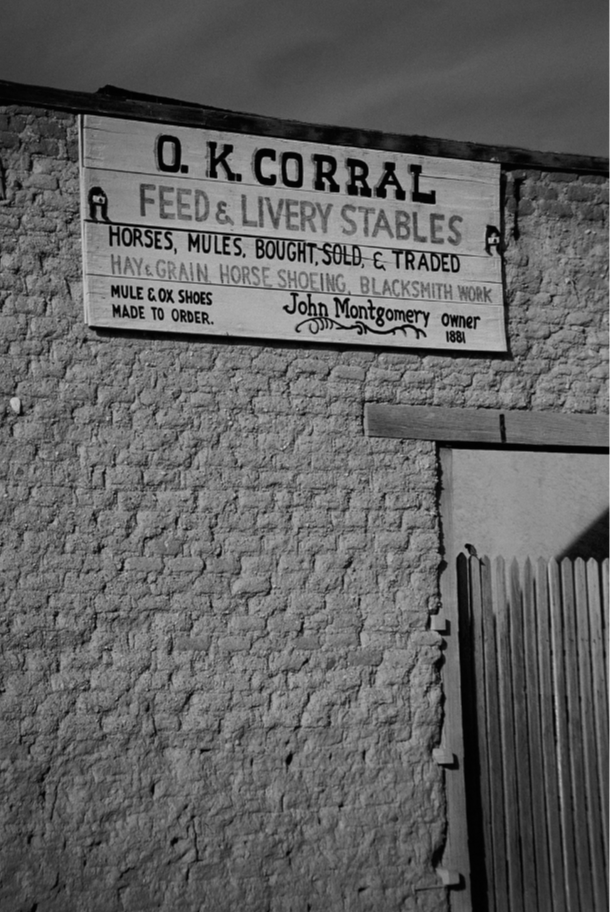
Both movies cover the now infamous Gunfight at the OK Corral (which wasn’t really at the OK Corral but that’s not as catchy of a name) and center former Kansas lawman Wyatt Earp as the protagonist.
The real Wyatt Earp
Tombstone focuses almost exclusively on Wyatt (Kurt Russell) when he lives in the silver boomtown of Tombstone, Arizona, which he travels to with his brothers Virgil (Sam Elliott) and Morgan (Bill Paxton) in the hopes of finally acquiring the fortune that has eluded them elsewhere. He’s also eventually joined by his friend, consumptive dentist-turned-gambler “Doc” Holliday (Val Kilmer). In the town, the Earps and Holliday clash with a group of rustlers and outlaws called The Cowboys, who have a penchant for lawbreaking and enthusiastic hellraising across the area, and their associates, such as local ranchers and political figures. Their ranks include “Curly Bill” Brocius (Powers Boothe), Johnny Ringo (Michael Biehn), and Ike Clanton (Stephen Lang).
The Gunfight, which leads to the deaths of Clanton’s brother Billy and the McLaury brothers, touches off a series of reprisal attacks, culminating in the severe wounding of Virgil and the murder of Morgan. Those actions in turn spark what is commonly called the Vendetta Ride, in which Wyatt and friends seek their own revenge. That’s a very condensed, simplified version of everything.
Wyatt Earp seeks to cover all of this, plus Wyatt’s earlier life as a farm boy in Iowa during the Civil War, his failed early attempts to become a lawyer and conventional family man in Missouri, his time as a lawman in tough Kansas cowtowns, and his later life fortune-hunting in Alaskan gold rush towns.
What is the primary difference in how the movies tell the same story?
As you can probably guess based on the descriptions, Tombstone has a much tighter focus, and I think it benefits from it tremendously. That’s a big part of what we’re going to be breaking down and analyzing. Tombstone has a much clearer idea of what it wants to be as a narrative and its characters’ roles in it. It not only knows exactly what story it’s trying to tell, but it also knows exactly what it is trying to say about it. That strong point-of-view works to its advantage as a narrative.
Wyatt Earp has a grander ambition (to tell Wyatt’s life story), but it doesn’t seem to have a clear point-of-view of what it wants its audience to take away from that other than it’s providing a lot more information about Wyatt Earp. As we’ve discussed before, an uncertain/muddled focus is highly detrimental to storytelling.
To kick the series off officially, next week, we’ll examine how Tombstone’s use of narrative structure is more effective and how you can apply those lessons to your own writing.
It’s time for what’s become an annual tradition for me–recapping my year in reading! For 2023, I read 50 books. That’s in addition to the 8 manuscripts and 1 journal article I edited. (I also picked up a freelance writing gig this year.) That’s two years in a row that I’ve read at least 50 books!
It’s dawned on me several times that I frequently use cooking and/or food metaphors/similes in explaining concepts about writing and/or publishing to my clients.
Part of it is my background in teaching and tutoring. I have some well-honed examples that just work because they’re easy to relate to, and I’ve carried them over to editing easily. As James Beard noted, “food is our common ground, a universal experience,” so simple examples revolving around food and basic cooking concepts are usually easily understood when you’re using them to make a point.
Part of it is also just that I love to cook and eat, and if I’m going to use an example to make my point, I’m going to default to something that’s fun for me to write about. Furthermore, the more I cook and the more I edit, the more overlap I see between both cooking and writing. The writer Paul Theroux explains it better than I ever could: “Cooking requires confident guesswork and improvisation– experimentation and substitution, dealing with failure and uncertainty in a creative way.” If you’re an author, you probably recognize a lot of the process of writing in that quotation too.
So, here are a few of my most used cooking to writing metaphors and the common writing issues/misconceptions they address.