

I have a couple of different shirts that bill me as a booktrovert that I always get compliments on when I wear them. Recently, I was wearing one of them, and someone asked me if it was a real word in the dictionary. I wasn’t in the position to verify immediately but answered, “Probably not.”
It struck me at the time that it is a great example of how editors handle words that an author may have invented or that is common slang that hasn’t made its way to the dictionary yet, and those are some of my favorite projects to work on as an editor. They’re fun precisely because they aren’t in the dictionary! But that doesn’t mean there still isn’t a process for deciding the best way to format them. So, in the same way, I walked you through the debate on Kyiv and Kiev a couple of months ago, I will walk you through how I handle words like booktrovert as an editor.
If I were editing a manuscript and came across Booktrovert, with that exact formatting, my immediate response would be to note that I need to look it up later before making any decisions. To minimize disruptions to my concentration, I often quickly type out “SS” in the Word comments of the manuscript as I am reading, which is my reminder to look something up for my stylesheet I create after I am finished reading the entire manuscript.
I add this note even when I am almost positive I know the answer because sometimes the advice has changed or I am mistaken, and I want to be certain before I add something to the stylesheet. I only stop and immediately look it up if I am completely flummoxed.

The stylesheet is where I record all editorial decisions about capitalization, spelling, hyphenation, etc. I don’t like to make those final decisions until fairly late in the editing process, when I am already well familiar with the manuscript and can make an educated decision. By this point, I have usually read the manuscript twice (so I have a good sense of how the issue appears across the manuscript and maybe why the author did so), researched any issues I found that I didn’t have an immediate answer for, and reached out to the author with queries about general trends or specific issues.
My instinct with Booktrovert is that it doesn’t need capitalization. A red squiggly line appears under it every time I type it, which some people will try to subvert by adding a hyphen, but that is not how hyphens work, so we’re not doing that unless I see some indication it is actually used commonly with hyphens.
After reading the manuscript, I usually work through the comments chronologically. When it is Booktrovert’s turn, I would check Merriam-Website’s website to see if they include it. They do not, and they helpfully inform me, “The word you’ve entered isn’t in the dictionary. Click on a spelling suggestion below or try again using the search bar above.” Other suggestions include controvert, which is a verb that doesn’t help me out here, and introvert and extrovert, which are both useful since Booktrovert is a play on the concept.
Both introvert and extrovert are presented that way, no capitalization and no hyphenation. Introvert can be both a noun and a verb, though the noun is what we are interested in for this question. Extrovert, meanwhile, is listed as both a noun and an adjective, though, again, the noun form is what is most pertinent to our situation.
Most interesting to me right here is the confirmation of my instincts on not capitalizing. We wouldn’t write “Shirley is an Introvert.” It would be “Shirley is an introvert,” so it follows that it would also be “Shirley is a booktrovert.”
If I had suspected hyphenation was needed (or wanted to gauge if it was okay to remove it), I would then consult Chicago Manual of Style, the default styleguide for American book editors. Chicago has a handy hyphenation guide that I use a lot when making these decisions. It breaks hyphenation rules down by category, and if you cannot find the exact word you’re looking for, you will see examples of similar words that can help guide you toward knowing what applies to the specific situation.
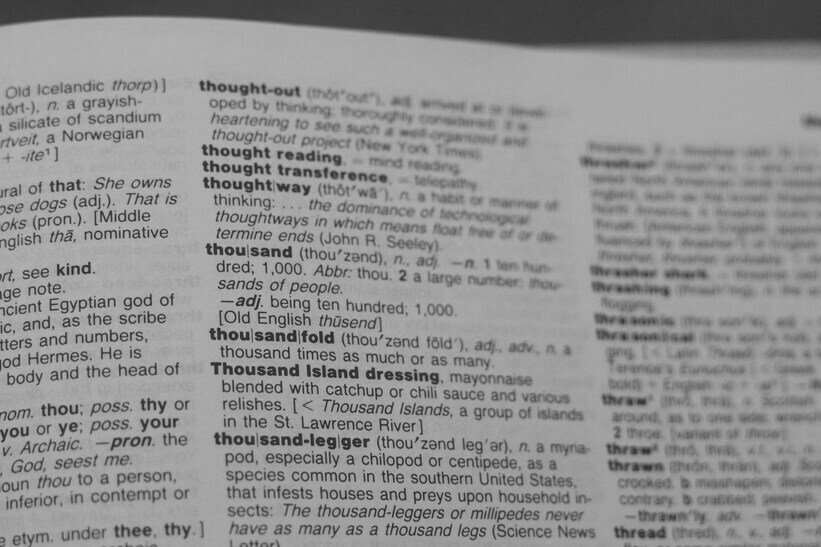
If the word is established slang or is used but is not in the dictionary, I sometimes also rely on Google-fu, particularly to inspect usages I can find in published books to determine if there is any pattern in usage that can guide me. I especially do this when Google-fu yields several different forms with no authoritative source on formatting and there is also no specific guidance in Merriam-Webster or Chicago on what to do. In the published books that are visible, I often notice a shift in formatting over the years that can be useful or a much greater usage of one version than another, which also can be helpful in informing my decision. If there is no one right answer, I usually reach out to the author at this point, explain the situation, and ask for their preference.
In this scenario, though, I don’t think that additional research and querying is necessary. I feel confident typing booktrovert into my stylesheet, which is organized alphabetically by letter.
So, under B, I will type
booktrovert (n., not Booktrovert)
The n. notes this is a noun and the not note is how I clarify the initial word I am changing. If I had found booktrovert as booktrovert and I am simply confirming the initial way the author typed it is fine, I would enter it as
booktrovert (n.)
Alongside, booktrovert might be
back and forth (adv., not back-and-forth)
back-and-forth (n., not back and forth)
Per Chicago, hyphenation for back and forth is dictated by whether it is being used by a noun or a adverb, which is why I try to note the part of speech for each entry in the stylesheet.
You might also find
back up (v., not back-up)
backup (n. and adj., not back-up)
Again, the part of speech for the word dictates how it is formatted. This time, back up is two words as a verb because it is a phrasal verb, whereas it is one word, unhyphenated, when it is used as a noun and an adjective.
You might also see
blond (n. and adj., not blonde)
This is per recent-ish advice from Chicago in its FAQ section. They have not incorporated this into the main book, but they agree with the AP, which journalists use, in moving away from the traditional distinction, preserved from the original French, between blond men and blonde women.

That being said, Chicago released that note in the middle of a series I have worked on where I followed the traditional spelling in the first book. Chicago and copyediting in general prize consistency, so I have made the executive decision to continue using both blond and blonde as needed in that series to ensure there is not an abrupt switch in the middle of a series, even if I do not make the distinction in other projects.
At this point our stylesheet for this theoretical project now looks like this:
B
- back and forth (adv., not back-and-forth)
- back up (v., not back-up)
- back-and-forth (n., not back and forth)
- backup (n. and adj., not back-up)
- blond (n. and adj., not blonde)
- booktrovert (n., not Booktrovert)
Depending on the project, my stylesheet can range from just a few pages to over twenty of these notes for literally everything from A to Z. It will also include any special formatting I did for numbers in their own section. I return stylesheets to the author alongside my marked-up copy of the manuscript and a separate version that has all changes accepted.
If the author then ever has a question about my changes, they can look at my stylesheet and see what I was thinking. (And I can do the same thing, months or years later.) In this case, booktrovert (n., not Booktrovert) would indicate that it does not need to capitalized and that correction should be followed throughout the manuscript. If the author adds more content, they can then know to just write it as booktrovert and not Booktrovert.
The same reasoning goes for a proofreader or copyeditor who may follow me. If they are questioning whether or not to make a change, they can look at the stylesheet and see I have already made a determination on the matter.
For this reason, I often enter words in the stylesheet that I did not edit because that is my way of letting whoever follows me know that it is okay, and it is not something I have inadvertently skipped. That’s why booktrovert (n.) would be there if it had appeared that way and I had reasoned it was fine as is.
A large part of copyediting is making hundreds of decisions like this for a manuscript.
Are you concerned about correctness and consistency in your manuscript? Reach out to me, and I can help! You’ll get a copyedited manuscript back and your very own stylesheet. 🙂